
Mother’s Day is right around the corner! You can order the moms in your life flowers today that will be delivered in time for Mother’s Day. If you order through my link above, you will also qualify for 25% off your order!
Deals are current at the time of the posting. Deals are also subject to change without notice.
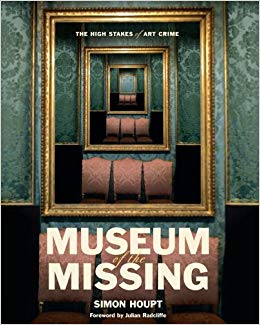 Kevin Nance of Booklist describes Houpt’s book through the following angle, “when houses like Sotheby’s trumpet their sales records – $104 million for a Picasso! – what’s a self-respecting art thief to do? In this brief and lively book, Houpt laments the transformation of art into an international commodity and sketches a series of quick portraits of famous latter-day art thieves and the intrepid detectives who try to catch them. In a few cases, Houpt has already been outpaced by events. Munch’s The Scream, stolen from a Norwegian museum in 2004, was recently recovered, and the Picasso sales record was eclipsed this year by the sale of a Klimt (once looted by the Nazis) for a reported $135 million.”
 When I was in my early 20’s, I broke up with my high school/college sweetheart and packed up my life for a semester abroad in Paris. I am all about books that take me back to Paris, especially those that are about a newly single woman navigating her new world in one of the world’s most beautiful cities. I was so excited when I received the galley for Sarah Morgan’s One Summer in Paris.
 , is a period in art history where the mature El Greco and the young Velazquez flourished.The court of Phillip III “ushered in a time of elaborate celebrations and religious festivals, a major expansion in new building, and an unprecedented rage for art collecting in the Spanish court. Spain’s art became more naturalistic and expressive; the royal portraits are masterpieces of detailed elegance, and the religious figures have reality and solidity new to the genre,” according to the School Library Journal.
 When the British painter,
 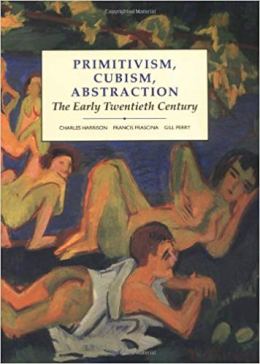 Primitivism is an area within art history that is most famously associated with artist Paul Gauguin. He often traveled to tropical areas such as Tahiti where he believed that he was observing primitive cultures that were untouched by the modern world. Largely, this was not the case, but in turn, Gauguin along with many artists who followed, began to paint native people in a basic, unassuming way.
 Artists will often look at, admire and even borrow from other artists to create their own style and ideas. For Pablo Picasso, this was Edgar Degas. His admiration bordered on near-obsession and even went on to extend to Degas’ personality.
 Beginning with Max Pechstein’s cover illustration for the Novembergruppe’s book, Rigby sets a clear tone for her catalog. Portrayed is an able bodied man, shirtless and with flames erupting from his chest. Above his head reads “AN ALLE KUNSTLER” which when translated means “to all artists” and served as a message to the German Expressionists. From the fiery introduction, Rigby transitions smoothly into the War Period where she focuses on the attitudes that created art.

 There are many books written about modern American painting. Many serve as a general overview of the period and some go into great detail and discussion over a specific artist or movement. What sets James W. Tottis’ catalog apart from other art books such as these is that along with strong, well-researched essays, he has also included high resolution details of larger works that coincide with specifics discussed in the text.
