Forging a Modern Identity: Masters of American Painting Born After 1847 – A Review

identityThere are many books written about modern American painting. Many serve as a general overview of the period and some go into great detail and discussion over a specific artist or movement. What sets James W. Tottis’ catalog apart from other art books such as these is that along with strong, well-researched essays, he has also included high resolution details of larger works that coincide with specifics discussed in the text.

Such an inclusion helps to further engage the reader about the material that is being debated and discussed. It offers readers a different view, a more in-depth vision of the works themselves as well as the period of art history with which they were created in. They truly bring a part of art history to life.

America Forges Its Own Identity

Moreover, looking at the period in general, James W. Tottis has chosen a significantly interesting time to further explore and present. Tottis includes works from the later 19th century and first half of the 20th, a time where America was changing drastically. In art alone, there was a large movement from away traditional landscape and historical narrative paintings. At this time, America itself was forging ahead, creating a new identity and moving towards a modern nation. Artist of the time were creatures of their environment and what was being created was largely based on the study of human form, society figures and everyday scenes.

Laying the Ground Work for the Abstract

From this breaking away from the traditional artists such as Mary Cassatt and Marsden Hartley were laying the ground work for what would inevitably follow in movements to come – abstraction of the human form and a general moving away from it all together.

Tottis does a great service to his readers by including many of the more well-known artists of this transitional period within the American art historical timeline. The text that he includes along with such examples bring to life this period and help readers to begin to make connections to varying art forms and artists who would follow this period.

Overall, James W. Tottis has done an excellent job in editing Forging a Modern Identity – Masters of American Painting Born After 1847. Both seasoned art historians as well as budding art history students would greatly benefit from Tottis’ work.

Forging a Modern Identity – Masters of American Painting Born After 1847 edited by James W. Tottis is available for purchase through D. Giles Ltd. with ISBN 1904832067

Art – Over 2,500 Works from Cave to Contemporary

2500Working with a close group of academics and editors, DK Publishing has put together a brief overview of the history of art. Here, in 2,500 color images, readers will find well-known works and details of pieces that have claimed fame in the art historical time-line. It is the sort of book that is suited towards those with an interest for the subject, but who lack time to devote to meticulous hours of study in the area. Not every appreciator of art has years to devote to the study of Art History. DK Publishing has reduced the academic world of the subject into 2,500 images.
From Altamira On

The earliest of cave paintings where uncovered at the turn of the last century in Altamira, Spain where an amateur archaeologist and his young daughter had been exploring. The discovery is often credited more towards the child than the parent. It is here that many introductions to art and its history have begun. Utilizing beautifully rendered pictures of the caves, Art: Over 2,500 Works from Cave to Contemporary begun a time-line that draws interested readers in to the world of Art History.

The Major Periods

The books goes on to create reproductions of works that have only begun to greatly influence the contemporary movements. DK Publishing reproduces works that were originally created by more than 700 artists, adding to the time-line that they had begun with the introduction to cave painting. It’s weakness, may fall in its glossing over the more precise periods of art, but for those who peruse the subject more as a fun past time will not be bothered by this as general knowledge and pictorial evidence abounds in these sections.

Where it Differentiates

While the book does gloss over many of Art History’s integral parts, it does go in depth with regards to artist biographies and time-lines. The backgrounds that the book covers as well as its organizational methods are what make it overall. It is here that the book shines in its rendition to the history of art. Along with its simplistic approach to the subject, it is also concise in what it lends to the reader making it a strong source in the arsenal of anyone who wishes to even briefly be associated with art and its history.

What is Most Striking

Outside of the explanations that the book offers are the more in-depth explanations of how these reproductions play into the time-line that so many academics have attributed to the study of art as a history. Overall, Art: Over 2,500 Works from Cave to Contemporary is a gem for anyone who wishes to learn more about Art History as a subject as opposed to a simple time-line that is largely overlooked by more contemporary historians that are quick to forget it as a scholarly endeavor.

Art: Over 2,500 Works from Cave to Contemporary is available through DK Publishing with ISBN 0756639727.

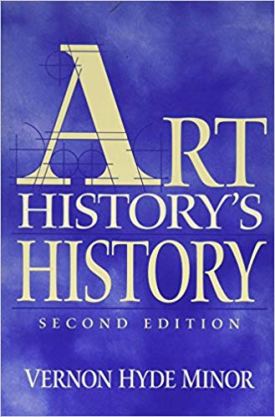
About Vernon Hyde Minor’s Art History’s History

art historyBudding art historians and those with only a slight interest in the subject should pick up a copy of Art History’s History by Vernon Hyde Minor. It not only creates a brief introduction into the rich and lavish world of Art History, but it also relates to the reader in such a way that it can be considered a book based on the introductory level of Art History. Vernon Hyde Minor simplifies the practice of art and its history to appeal even to the casual reader of the subject.
Vernon has done something that most art historians would view as the impossible – he has taken the entire history of art and condensed into 200 pages. He has done so in such a way that readers are not missing out on any sort of basic introductory information. If anything, such a concise compilation will draw more people into the history of art and help to foster an appreciation for the subject that might have otherwise gone overlooked.

Terminology

In Art History, much of the terminology used can be considered to be a language all its own, if it is not in another language to begin with. The subject is steeped heavily in French and German and those who are not trained in either language may have a hard time adjusting to Art History as a subject. However in his book, Vernon avoids this sort of confusion thereby allowing the history of art to be understood by those who are not classically trained in the subject.

Why is Art History Taught?

Through methodologies and the evolution thereof, Vernon Hyde Minor attempts to explain to his readers not only the importance of Art History, but also why it is being taught, specifically in American classrooms. Unlike its European counterparts, the American people often times overlook the importance of the subject and are quick to dismiss it when their children return home from their first semester of college, announcing their major as Art History. Vernon Hyde Minor tries to debunk that ideal, but displays its importance through his methodology.

Focus on the Famous

Many of the works discussed and highlighted in Vernon’s book are famous works that the general public would be aware of. By doing so, Vernon’s concise and condensed history of art has the potential to draw people in to the subject matter. By the time a reader has completed this book, it is sufficient to say that they would be willing and open to the idea of learning and reading more about the mini-course they just took on the subject.

Vernon Hyde Minor’s Art History’s History is available for purchase through Prentice Hall with ISBN 0130851337.

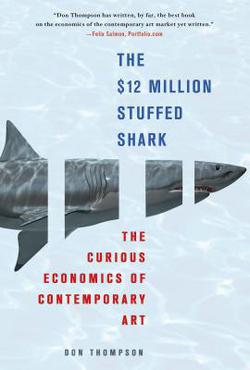
The $12 Million Stuffed Shark: The Curious Economics of Contemporary Art – A Review

stuffedIn contemporary art, there are many questions to be raised as to why works sell and more strangely, how much they sell for. With each new movement, there are a series of new questions brought to the table – is this art? What will people pay to own it? Is there a place for it?

The $12 Million Stuffed Shark: The Curious Economics of Contemporary Art takes an in depth approach to such questions that are raised daily within the art world. Drawing on psychology and the economics of the contemporary art world, The $12 Million Stuffed Shark brings to light the flat out insane prices and lengths that people will go to to own the next “big deal.”

Pollock

When Jackson Pollock, for example, was emerging as the face of abstract expressionism, he was doing so at a time where form and training defined art. Had it not been for the help of Peggy Guggenheim and his wife, Lee Krasner, Pollock’s work would have continued to be overlooked. So, why, under what circumstance does his work now sell for a cool $140 million? Answer – A major contemporary art world figure head deemed it worthy. It is just one side of the psychology of the art world and how it feeds the art market’s economic makeup.

Damien Hirst

Following the same sort of mindset, Hirst paid to have the shark caught and then had the two ton carcus taxidermied and mounted, titled it The Physical Impossibility of Death in the Mind of Someone Living and set a $12 million dollar price tag. It didn’t sell, largely in part because of the weight of the piece, but also because unlike Pollock, no art world big-wig proclaimed it as the next big movement. It was eventually purchased by a wealthy investor after much controversy.

A Question Raised

By covering these types of controversial pieces and their buyers, The $12 Million Stuffed Shark: The Curious Economics of Contemporary Art makes the reader focus on questions that have plagued the art world, society and the individual ever since the Venus of Willendorf and those questions often have only personal answers. After all, what is art? What defines a creation as a work of art? Who needs to say it is art before it can seriously be considered as such?

The $12 Million Stuffed Shark: The Curious Economics of Contemporary Art by Don Thompson is available for purchase through Palgrave Macmillan with ISBN 0230610226.


My First Summer in the Sierra (Illustrated Edition) – Book Review

sierraPicture getting to see some of the most breath-taking parts of Yosemite National Park before it ever was Yosemite National Park. Think of sweeping mountains, fresh, gushing water and abundant plant life. 19th century romanticism only touched on how beautiful these landscapes were and in some cases still are. Now, combining that 19th century writing with beautifully rendered 21st century photographs, this illustrated edition of a classic is not something that is easily put down.

The Power of Descriptive Narration

John Muir’s adventure into the Sierra is wonderfully documented, pairing stunning nature photography with an in-depth personal narrative that makes you feel as though you are along side him, taking in the scenery and experiencing everything that untamed nature has to offer.

“Before noon,” Muir writes, “we passed Bower Cave, a delightful marble palace, not dark and dripping, but filled with sunshine, which pours into it through its wide-open mouth facing the south. It has a fine, deep, clear little lake with mossy banks embowered with broad-leaved maples, all underground, wholly unlike anything I have seen in the cave line even in Kentucky, where a large part of the State is honeycombed with caves.”

Muir creates pictures, not only with the included photographs by Scot Miller, but also with his keen sense of detail and explanation which evident throughout his narrative. Combined with the equally as detailed photographs, Muir delivers with My First Summer in the Sierra.

My First Summer in the Sierra and John Muir

Originally published in 1911, My First Summer in the Sierra enticed many people to visit the Yosemite area. John Muir was a young Scottish immigrant who had not yet become the famed naturalist that he would be later in life. Later dubbed, “John o’ the Mountains,” Muir first trekked into the Sierra shortly after the end of the Civil War.

After falling in love with the area, Muir later returned in 1869 to work with a group of shepherds as they herded a flock of 2,500 sheep toward the headwaters of the Merced River. My First Summer in the Sierra captures much of this adventure, including vivid descriptions of what Muir under-went during his time in the unspoiled area of Yosemite.

Other books that document and explore the American landscape include Joseph Sohm’s Visions of America: Photographing Democracy.

My First Summer in the Sierra by John Muir with forward by Dayton Duncan and Ken Burns with photography by Scot Miller is available for purchase on April 12, 2011 with ISBN 9780618988518 through Houghton Mifflin Harcourt.

Your Baby Is Speaking to You – Book Review

babyA baby book is not something that readers will typically associate with art books. However, the photography included in Your Baby Is Speaking to You is heart-warming and makes the book a great one to leaf through, even for those of us who do not have children and for those of us who are not usually captivated by other people’s off-spring.

Photography and Parenting Advice

Nugent’s advice for new parents is accompanied by photographs that demonstrate the different communication techniques that babies innately demonstrate when interacting with their parents. The photographs are up close and personal, capturing heart-felt moments and sweet glimpses into the simple gestures that are exchanged between baby and parent. Moreover, if you are reading the book for the advice on how your baby is communicating, Kevin Nugent is more than a solid enough authority to do so. Dr. Nugent is a well-known authority on parent-infant communication.

Dr. Nugent worked with acclaimed photographer Abelardo Morell to truly capture what he discusses in each chapter. Morell’s body of work shows a clear understanding of intimate moments and how to get them just right. The photographs that are included in Your Baby Is Speaking to You are innocent and heart-felt.

Infant-Parent Communication

Nugent illustrates a wide-array of various communications that occur between infant and parent. He included everything from early smiling to startling, listening to your voice and recognizing your face to feeding and sleeping. He also highlights:

  • Yawning
  • Various cries and their meanings
  • The different sleep states and the body language that accompanies them

Overall, Your Baby Is Speaking to You is hybrid in that it gives new parents an accessible way to read and understand more about their infant while including heart-warming photography that can be enjoyed by those of us who are not trying to understand how our non-existent infants are not communicating with us.

Dr. Kevin Nugent studied infants through hands-on experiences through intimate access to the infants and their families. Compiled with his education and experience in the field, Nugent’s book presents an informative and well-researched look into infant-parent communication. Readers have commented that Nugent’s book is one of the more informative and easier to understand books about infant-parent communication, further explaining that it was a quick read that gave them a lot more insight into their children, their lives and their roles as parents.

Your Baby Is Speaking to You by Dr. Kevin Nugent with photography by Abelardo Morell was published by Houghton Mifflin Harcourt on January 13, 2011 with ISBN 0547242956.

Death and Restoration (Art History Mystery) – Book Review

dearhThere is nothing quite as lush as pairing the rich, vibrant world of art history with that of a mystery. Iain Pears, an art historian, pairs the two together in his novel, Death and Restoration. It is the sixth novel in Pears’ Jonathan Argyll series. However, readers who are new to it, will not be lost in what came in books prior. Pears subtly reminds his readers of important past events and relationships that are key to following the mystery in Death and Restoration.
The Plot

Again, the book opens with the series main characters, Argyll and his soon-to-be wife, Flavia di Stefano. The two are immersed in the Italian art world– Flavia, as a member of the Rome police’s art squad and Argyll as a professor of art history. The plot is mainly centered around a art-theft, but breaks off into smaller sub-plots that each character seamlessly narrates.

Argyll, for example is bothered by his fiancee’s frequent absences from their wedding planning while, Flavia is more pre-occupied with trying to prove that her revival, Mary Verney is in Rome, bent on master-minding a great art theft. However, everything is changed when it is uncovered that Verney is in Rome to steal a painting, but her reasons for it have nothing to do with personal gain, but rather to free her kidnapped granddaughter Louise from the sadistic Mikis Charanis.

The Mystery

Further questions arise, though, when Verney is supposed to steal the Madonna artifact from San Giovanni. The big question is, why does Mikis Charanis want this artifact? Why would he want the lesser known, not as valuable artifact when he could black mail Verney into stealing the Caravaggio that San Giovanni is known for?

For those who had fallen in love with the Jonathan Argyll series with An Instance of the Fingerpost, they will not be let down by where Pears takes the series in Death and Restoration. Overall, this installment of the series is full-bodied and enticing as the reader is led through the underbelly of the art world and through the lush richness of Baroque-inspired Italy.

Other works in the Jonathan Agryll series includes The Raphael Affair, The Titian Committee, The Bernini Bust, The Last Judgement, and Giotto’s Hand. So far, the series has not been extended past The Immaculate Deception. Pears does have a body of work outside of his Jonathon Agryll series.

Death and Restoration by Iain Pears was published on August 5, 2003 by Berkley Trade with ISBN 0425190420.

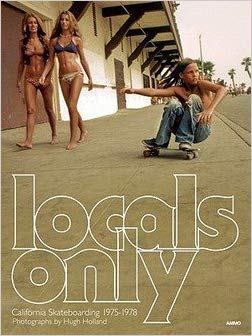
Locals Only: California Skateboarding 1975-1978 – Book Review

skateThe world of skateboarding is something that many kids from the late 1980’s and up until present day are at least some what associated with. Skating celebrities like Tony Hawk have mainstreamed the sport, turning it into video games and entertainment. However, skateboarding did not begin with the 80’s or even with the grunge movement of the early 1990’s. Skateboarding has been around since the 1950’s.

A Brief History of Skateboarding

Skateboarding began in the 1950’s when surfing was at its peak. People soon realized that a skateboard gave them the same feel as surfing. Skateboarding then slowly grew over the decade and by 1959, first Roller Derby Skateboard was for sale.

By the 1960’s, skateboards had entered mass production. Many stores were carrying them and the sport was quickly becoming a new fad. However, just as with any new sport, safety concerns soon began and people began speaking out against skateboarding, urging parents not to buy their children skateboards. The fad quickly died out, almost as fast as it began.

On Locals Only: California Skateboarding 1975-1978

When the 1970’s hit, so did the next big skating boom. The way skateboards were made changed and skate-parks began popping up all over the continental United States. The boards themselves were being made wider, offering skaters more stability especially on vertical surfaces.

Photographer, Hugh Holland, though not a skater himself, began to document these skateboarders in Los Angeles, parts of the San Fernando Valley, Venice Beach, San Francisco and Baja California, Mexico. It was also during this time, that Southern California was experiencing a serious drought which left much of the areas pools emptied for rebellious skaters to break into and use to hone their skills.

Holland documented all of this for three years, capturing the very beginnings of what would become a huge sport in the late 1990s and well into the new millennium. Holland’s photographs have that great dated feel to them and really makes the collection look authentic and more interesting than other collections that were captured on a digital camera as opposed to film.

Adding to that, the fonts chosen and the overall attitude of the collection, makes the reader feel part of and immersed in what Hugh Holland was documenting over thirty years ago. Overall, Holland captured a moment in time that might have gone otherwise overlooked. His collection is interesting and fun to look at and read through.

Locals Only: California Skateboarding 1975-1978 by Hugh Holland and Steve Crist was first published on October 1, 2010 by AMMO Books with ISBN 9781934429471.

Biophilic Cities: Integrating Nature into Urban Design – A Review

biophilicThe world unto itself is a work of art, with its natural beauty and majestic landscapes. Too often, modern society tends to forget the world we live in, failing to preserve the beauty that we were given from the beginning. Biophilic Cities explores the importance of incorporating wilderness and nature in our urban lives. City living makes it easy for us to forget what nature is like, everything from its beauty to its power to heal even the most jaded of city landscapes.

About Biophilic Cities

In his book, Timothy Beatley argues for the greening of future cities, stating that renewable energy and better public transit are just one part of what a green city is. More importantly, urban planning needs to begin to focus around coexisting with the natural world instead of constantly impeding on it. A biophilic city, argues Beatley, plans in conjunction with nature. It incorporates the natural world into its buildings and planning.

It is imperative that as we move towards the future, we begin to take into consideration the importance of doing so because nature is an important part of sustainable living and thus, overall existence. What is most notable about Beatley’s ideals for a future planned city, is that it not only incorporates the nature that was already there in the first place, but it also strives to replenish and revive what has already been lost and degraded by poor planning in the past.

Including Nature in Urban Design

Timothy Beatley offers many solutions to how urban planners can incorporate nature into urban development. Beatley includes essays and beautiful photographs of roof-top gardens, green walk-ways, living walls and sidewalk gardens. His ideas for what a city can be, does not make it difficult to put these new ideas into place. Rather, his ideas for the greening of urban living are about coexistence and even a beautification of drab urban settings.

Overall, Biophilic Cities presents interesting ideas on what future cities could strive to become. The essays though interesting, can be a bit dry in places. However, Beatley does make up for that by including beautiful nature and urban photography which often enhance his ideas on what a city can be and what the issues with past urban planning have caused. It will be interesting to see how many of Beatley’s solutions begin to redefine what we have known as the urban landscape.

Biophilic Cities by Timothy Beatly is available for purchase with ISBN 1597267155. It was originally published on October 25, 2010 through Island Press.

Book Review: The Women

womenMany creative geniuses have a torrid past with the women that loved them. Pablo Picasso and Jackson Pollock are just two examples. However, in T.C. Boyle’s The Women, he focuses on the madness and the passion that engulfed much of famed architect Frank Lloyd Wright’s life.

The Four Women

T.C. Boyle brings to life Frank Lloyd Wright’s life by telling it through the four women who loved him in life. He begins with the failure of Wright’s marriage to his wife, Miriam, an older, passionate southern woman who had a heavily hidden addiction to morphine.

Boyle goes on to infuse the the novel with heat and passion when Wright meets the woman that would take him away from his wife. Exotic and fiery, Olgivanna Milanoff became dubbed the “Dragon Lady” by Lloyd’s apprentices. She lived with him at his famed estate, Taliesan first under the lie that she was his maid, but her pregnancy quickly gave away their affair.

More sweetly, Boyle also recounts Wright’s relationship with his first wife, Kitty Tobin with whom he had had six children with. More idealized and poignant, the passages on this relationship humanize Wright while the other women seem to make him more tortured and lost.

What is most tragic about the novel is the inclusion of Mamah Borthwick Cheney, Wright’s mistress who was tragically murdered at the Taliesan estate in 1914 along with her two children.

Downfall of The Women

As scandalous and impetuous much of the historical basis for the novel is, what is the downfall of Boyle’s novel is the narrator. The story is told from the viewpoint of Frank Lloyd Wright’s Japanese apprentice which just does not fit the novel. Moreover, the over-usage of footnotes to ensure that all information even parts that do not seem to matter take the reader away from the meat of the story. They often are confusing and stuck in places that would be better suited without them. It becomes rather difficult to get through the story in some parts.

All in all, T.C. Boyle does a great job of making The Women seem more of an actual biography than a historical fiction novel. It would have been better served if Boyle had reserved himself with regards to the amount of information he felt necessary to include with the text and with the foot notes.

The Women by T.C. Boyle was first published in 2009 by Viking Publishing with ISBN 978-0-670-02041-6.