Sheramy Bundrick’s Sunflowers: A Novel of Vincent Van Gogh – A Review

sunThere is nothing easy about writing historical fiction. Once a writer adds art into the mix, the project becomes something entirely different as many artists, especially those like Vincent Van Gogh are not so easily defined. Furthermore, having the ability to blend factual art historical information with the fiction a writer creates, is difficult and can often produce novels that are more of a creation as opposed to a well-researched, factual backdrop with a fictional story also added for entertainment.

This, however, is not the case with Sheramy Bundrick’s Sunflowers. As an art historian and professor, Bundrick brings to the table a strong set of skills and research that are more than evident in her fictional retelling of the final two years of Dutch painter Vincent Van Gogh’s troubled life. She recounts with some liberty, the time that the struggling artist spent with a young woman named Rachel – the very same lady that would be presented with a fragment of his ear.

Rachel Corteau

In reality, there is nearly nothing that has survived in history about the real Rachel, other then a document that lists her name, address, occupation and that she was the woman Van Gogh asked for at the brothel to present her with a piece of his ear. Other artists such as Bernard and Gauguin mention Rachel in their writings and letters only in passing, referring to her as the “cafe girl” or “a wretched girl” respectively.

Irregardless of the reality of the factual, historical relationship between Van Gogh and Rachel, Bundrick writes her story having imagined what it might have been like had there been a relationship between the two people while incorporating factual information regarding the time period and Van Gogh’s work.

Mixing Factual with Fantasy

Moreover, Bundrick creates this mixture of fantasy and art historical fact seamlessly. She captivates her readers from the very first page and does not let them go until they reach the inevitable end of both the novel and of Vincent Van Gogh. Her intricate descriptions make her readers feel as though they are part of the dingy cafe where Vincent and Rachel meet to talk, part of the garden where he draws her and even part of the city and busyness of the city of Arles as a whole.

Overall, Sheramy Bundrick’s work is captured best through Susan Vreeland, author of Life Studies, ” [Bundrick] lays bare in rich, compelling scenes the mystery of the turbulent and misunderstood final two years in Van Gogh’s life.” Sunflowers is a gem of a first novel and makes for an interesting glimpse into the mental decline of one of the world’s most famous artists.

Sunflowers – A Novel of Vincent Van Gogh by Sheramy Bundrick is available for purchase through Avon with ISBN 0061765279.
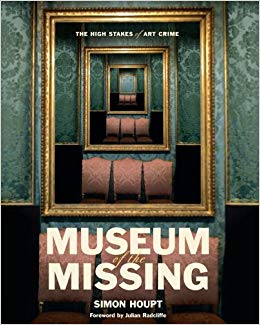
Museum of the Missing: The High Stakes of Art Crime – A Review

missingKevin Nance of Booklist describes Houpt’s book through the following angle, “when houses like Sotheby’s trumpet their sales records – $104 million for a Picasso! – what’s a self-respecting art thief to do? In this brief and lively book, Houpt laments the transformation of art into an international commodity and sketches a series of quick portraits of famous latter-day art thieves and the intrepid detectives who try to catch them. In a few cases, Houpt has already been outpaced by events. Munch’s The Scream, stolen from a Norwegian museum in 2004, was recently recovered, and the Picasso sales record was eclipsed this year by the sale of a Klimt (once looted by the Nazis) for a reported $135 million.”

The Hypothesis

Auction house pricing has been a big complaint of many in the art world over the years. It is clear that such enormous prices for famous works by such well-knowns as Picasso only drive up the temptation behind nabbing one of these high-priced canvases for claim in a art thief’s private collection. Taking this idea, Houst takes the reader into the dark underbelly of one of the world’s largest markets and shows the reader just how underhanded some of the worst crimes in art have come to be.

From Munch’s The Scream to the Henry Moore Sculpture

Nothing will illicit intrigue more than when a largely famous work of art goes missing. Houpt does not miss a beat of the action in Museum of the Missing: The High Stakes of Art Crime as the author delves into heavy detail over such infamous thefts as the theft of The Scream and the even more bizarre theft of the nearly two-ton bronze sculpture by Henry Moore. Using photographs, illustrations and case studies, Houpt brings these crimes against art to life while still keeping the reader intrigued to learn just how people were able to pull off these brazen acts.

Large-Scale Thefts: From the Nazis to Iraq

What was most intriguing about this book was the coverage that Houpt included on much more large scale operations such as the Nazis’ art theft during World War II and the acts of looting that nearly crumbled the Iraqi Museum and outlaying institutions. If the Rape of Europa piqued your interest, then Museum of the Missing: The High Stakes of Art Crime will take it even another step.

Museum of the Missing: The High Stakes of Art Crime by Simon Houpt is available for purchase with ISBN 1897330448 through Black Walnut/Madison Press.

Book Review: One Summer in Paris by Sarah Morgan

parisWhen I was in my early 20’s, I broke up with my high school/college sweetheart and packed up my life for a semester abroad in Paris. I am all about books that take me back to Paris, especially those that are about a newly single woman navigating her new world in one of the world’s most beautiful cities. I was so excited when I received the galley for Sarah Morgan’s One Summer in Paris.

Morgan’s novel focuses around two women from different worlds: Grace and Audrey. Grace is an American who was looking forward to celebrating her 25th wedding anniversary with her husband whom she books a trip to Paris for. Only, he really surprises her when he tells her that he wants a divorce. Grace packs up her life and her heartbreak for Paris where she finds herself in an apartment of a bookshop. It is here she meets Audrey, a teenage Londoner, who is also working through her own heartbreak. Audrey with her limited French language skills begins to work in the bookstore and forms an unlikely friendship with Grace. Together, the two become their own sort of family.

Inevitably, David, Grace’s husband, decides that he doesn’t want to be with his mistress, Leesa, and wants to reconcile with Grace. This is where the story lost me a little. He is still sleeping with Leesa, but has decided that he rather be with Grace. I felt like he didn’t suffer enough to make up for his crimes and it was here that I was a bit turned off.

Overall, though, this novel is a light summer kind of read that will make you laugh out loud at the scenes between Grace and Audrey. The premise that landed them both there as well as how a small town part time teacher could afford to buy a summer aboard left me guessing, but if you can get past those plot holes, you will definitely enjoy this quick read about heartbreak, female friendship and the power of moving forward in your life even if your heart is broken.

One Summer in Paris by Sarah Morgan is scheduled for release on April 9, 2019 from Harlequin with ISBN 9781335507549. This review was created after reading an advanced electronic copy of the novel from the publisher.


El Greco to Velazquez – A Review

The Spanish court, specifically under the reign of Phillip IIIspain, is a period in art history where the mature El Greco and the young Velazquez flourished.The court of Phillip III “ushered in a time of elaborate celebrations and religious festivals, a major expansion in new building, and an unprecedented rage for art collecting in the Spanish court. Spain’s art became more naturalistic and expressive; the royal portraits are masterpieces of detailed elegance, and the religious figures have reality and solidity new to the genre,” according to the School Library Journal.

Scholarly Essays

In conjunction with the lavish world of Spanish court portraiture, Bass juxtaposes her rich subject matter with scholarly essays written by some of the nation’s leading art historians. Baer (senior curator, Museum of Fine Arts, Boston) and Schroth (senior curator, Nash Museum, Duke Univ.) lend their extensive knowledge on Spanish portraiture to the catalog with their thought-provoking and well-written essays on the subject. In addition to the inclusion of better-known names such as El Greco and Velazquez, Bass and her contributors also include lesser known artists who lived and worked in the court of Phillip III.

Foundation of the Spanish Style

Through the essays, the reader sees how the naturalistic and dramatic style of paitning would slowly come to define Spanish court portraiture under Phillip III and would go on to lend to the new innovations that would come in the future after El Greco and Velazquez. The history is rich and deep in the Spanish mindset and lends to the reader a fascinating journey of the evolution of court portraiture under each new reign.

Imagery

Bass includes over 170 color plates that are so well-lit and reproduced that the exhibition catalog without the essays would serve as a great way to understand the art of the court of Phillip III with just the imagery alone.

Crucial Artistic Development

As editor Ronni Baer notes in the description of the catalog, Phillip III “actually presided over an era of crucial artistic development in Spain. His reign was a time of cultural and political vitality for the Spanish monarchy, as the king and his court, having successfully maintained a peaceful foreign policy in Europe (the “Pax Hispanica”), ushered in a style of grandeur where fabulous gala celebrations, building campaigns, picture collecting, recreation and travel were the order of the day.

Accordingly, the art of this period flourished, witnessing the birth of a naturalistic style that was variously reflected in a new attention to detail and spatiality in court portraiture, the thriving of still life, the humanizing of saints and the development of polychrome sculpture.” Such a description only teases the reader as to what will unfold while reading Bass’ catalog.

El Greco to Velazquez by Laura Bass is available for purchase through MFA Publications with ISBN 0878467262.

On Carrington – A Life: An Overview of Gretchen Gerzina’s Dora Carrington Biography

carringtonWhen the British painter, Dora Carrington is discussed, the name Lytton Strachey is not too far behind. Carrington was associated with the Bloomsbury Group, a circle of artists who worked near Bloomsbury in London during the first half of the twentieth century. Its famous roster not only included Strachey, but Virginia Woolf as well.

During her lifetime, Carrington was not a well-known artist, and rarely exhibited any of her work. She did, however, work at the Omega workshop for a short time. It would not be until the 1970’s that a renewed interest in her work would begin.

In many ways she was a woman ahead of her time. She bobbed her hair, wore a mix of men and women’s clothing and despite having later married, she kept residence with the love of her life, who just happened to be gay. Either way, Carrington epitomized the Bohemian lifestyle that was very much a taboo during the time in which she lived.

Lytton Strachey

Strachey was a homosexual writer who Carrington falls completely in love with early on in her life. Gerzina heavily documents these feelings in the biography through a reproduction of sketches and letters that were sent between the two. Gerzina’s biography heavily focuses on this relationship more so than Carrington as a painter. Though, such an approach is interesting, it robs from art history as readers have to look towards other sources to learn more about Carrington the painter and not Carrington, the admirer of a homosexual artist.

Marriage to Ralph Partridge and the Affairs

There is no doubt that Partridge loved Carrington as Gerzina depicts their relationship with a sort of glow. Partridge would save Carrington from her first suicide attempt while never forgiving himself for failing to come to her aid in her second, fatal attempt. Gerzina also shows another side of Carrington, the one that often dabbled in lesbian affairs of her own while creating strong attachments and attractions to other artists such as Gerald Brenan.

Portrayal of Carrington, the Painter

Despite Gerzina’s approach to the biography, included are several chapters and photo inserts of and on Carrington’s work that help the reader to better understand Carringon as a painter outside of her absurd and often peculiar relationships with fellow artists.

The Movie

Gerzina’s biography was made into a movie entitled Carrington in 1995 and it stared Emma Thompson.

Another book that discuss Bohemia, Bloomsbury and people from Carrington’s circle is Virginia Nicholson’s Among the Bohemians: Experiments in Living 1900-1939.

Carrington: A Life by Gretchen Holbrook Gerzina is available through purchase online with ISBN 039331328X through W. W. Norton & Company.

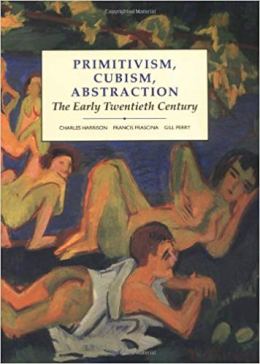
Primitivism, Cubism, Abstraction: The Early Twentieth Century

cubismPrimitivism is an area within art history that is most famously associated with artist Paul Gauguin. He often traveled to tropical areas such as Tahiti where he believed that he was observing primitive cultures that were untouched by the modern world. Largely, this was not the case, but in turn, Gauguin along with many artists who followed, began to paint native people in a basic, unassuming way.

Towards the later half of the 19th century and into the 20th century, artists began to form primitivist artist colonies in Germany and France. The fauvists and German expressionists would later follow.

In Primitivism, Cubism, Abstraction: The Early Twentieth Century, Perry, Frascina and Harrison begin by focusing the beginning of their catalog on the work of the primitivists and then moving into the works of the cubists and abstractionists, thereby creating a thematic and seamless look at the movement of art from and through the 19th and early 20th century.

Dr. Charles Harrison

Harrison was a professor at The Open University in the United Kingdom. He made many contributions to the humanities and more specifically the arts. He passed away in August of 2009. His full obituary is available through the University’s website.

Francis Frascina

Frascina is a is John Raven Professor of Visual Arts in the Department of American Studies at Keele University in the United Kingdom. According to the University’s website Frascina “founded the Department of Visual Arts at Keele University in 1994 and served as Head of Department from January 1994 to October 1998. He formerly held academic posts in Fine Art at Leeds University and in Art History at the Open University. His research interests include the social history of modern art and modernism and the relationships between art, culture and politics in America since 1945.”

Gill Perry

Perry is the co-chair of the Gender in the Humanities Research Group in the Arts Faculty at Open University in the United Kingdom, and was the Reviews Editor of the journal Art History from 1995 – 2001. Along with her accomplishments with in the University, she has also written several books and catalogs. According to the University’s website, she is also a panel member (Panel 2) of the Arts and Humanities Research Council, the main UK funding council for academic research.

Primitivism, Cubism, Abstraction: The Early Twentieth Century by Gill Perry, Francis Frascina and Dr. Charles Harrison was first published on May 26, 1993 and is available for purchase through the Yale University Press with ISBN 0300055161.

Picasso Looks at Degas – A Review

picassoArtists will often look at, admire and even borrow from other artists to create their own style and ideas. For Pablo Picasso, this was Edgar Degas. His admiration bordered on near-obsession and even went on to extend to Degas’ personality.

Picasso not only borrowed from the artist that he so admired, but he also took from and reworked some of Degas’ works, including the brothel mono-types that Picasso would acquire during the later years of his artistic career.

Comparing Degas and Picasso

It is evident, by looking at the body of work from both artists, that they both were obsessed with the female figure which they both portray in the form of dancers, singers and prostitutes. Degas tended to favor capturing the female form with the portrayal of ballet dancers and singers. Some of his more famous works include L’etoile and The Singer in Green. Comparatively, Pablo Picasso is more widely associated with works such as Les Demoiselles D’Avignon, a cubist portrayal of the ladies that composed a scene consisting of prostitutes. Some scholars have since made a connection between Picasso’s work and that of the court portraits of Spanish painter, Velazquez.

Degas and Picasso Exhibitions

This exhibition catalog is from the Sterling and Francine Clark Art Institute located in Williamstown, MA which hosted the exhibition that depicted the influence of Edgar Degas on Pablo Picasso. The exhibition lasted from June 13, 2010 until September 12, 2010. It was a joint project between the Sterling and Francine Clark Art Institute and the Museu Picasso, Barcelona. According to the Clark Institute website, it was funded in part by a grant from the National Endowment for the Arts, an indemnity from the Federal Council on the Arts and the Humanities, and with the special cooperation of Fundación Almine y Bernard Ruiz-Picasso para el Arte.

About the Author

According to amazon.com, “Elizabeth Cowling is Professor Emeritus of History of Art at Edinburgh University, and an independent scholar and exhibition curator. Richard Kendall is Consultative Curator of Nineteenth-Century Art at the Clark, as well as an independent scholar and exhibition curator. Cécile Godefroy is a researcher at the Fundación Almine y Bernard Ruiz-Picasso para el Arte in Madrid. Sarah Lees is Associate Curator of European Art at the Clark. Montse Torras is Exhibitions Coordinator at the Museu Picasso in Barcelona.”

Picasso Looks at Degas by Elizabeth Cowlin, Mr. Richard Kendall, Montse Torras, Sarah Lees and Cecile Godefroy is available for purchase through the Clark Art Institute with ISBN 0300134126. It was originally published on July 13, 2010.


A Review of War-Revolution-Weimar: On Ida Katherine Rigby’s Exhibition and Catalog Essays

weimarBeginning with Max Pechstein’s cover illustration for the Novembergruppe’s book, Rigby sets a clear tone for her catalog. Portrayed is an able bodied man, shirtless and with flames erupting from his chest. Above his head reads “AN ALLE KUNSTLER” which when translated means “to all artists” and served as a message to the German Expressionists. From the fiery introduction, Rigby transitions smoothly into the War Period where she focuses on the attitudes that created art.

The War Period

Rigby states how many German soldiers emerged from World War I as vehement opponents to war. With brief yet concise explanations, Rigby juxtaposes the historical influences of the period along with dark depictions of a post-war culture, shedding further light on the mind state of artists who were working during this period. Otto Dix and Christian Rohlfs are among the largest contributors to this section.

Political Posters

What is the most interesting section of this catalog is the fourth segment which covers political posters during the Revolution. The now socialist government moved to allign itself with the Expressionists. They had hoped that this group of artists would ignite in the workers the same spirit that had caused them to revolt in the first place. What was inevitably created were posters with blatant political satire that were rich in harsh imagery and color, unlike what the infamous Daumier had been doing during the French Revolution two hundred years before.

The Weimar Art Period

The Weimar Republic refers to the parliamentary republic established in 1919 in Germany. The culture of this government lasted from 1919 to 1933 when Hitler and the Nazis party rose to power. It is during this period that the aforementioned political posters would flourish, the beginning to Bauhaus would be introduced to the world and Germany would be viewed as an intellectual center. Otto Dix is most assocaited with this period as he was very prolific during these years. Rigby includes many of his poster throughout th book and especially in conjunction with the Weimar Period.

Overall, Rigby compiled a clear exhibition and accompanying catalog. It is both intriguing and concise at the same time which allows for the reader to take time while studying the images that she has chosen to portray along with her essays. Its a different look at Germany, as the Weimar period is not often covered in-depth as it is here.

War-Revolution-Weimar by Ida Katherine Rigby is available through the Sa Diego State University Press with ISBN 0916304620.

Forging a Modern Identity: Masters of American Painting Born After 1847 – A Review

identityThere are many books written about modern American painting. Many serve as a general overview of the period and some go into great detail and discussion over a specific artist or movement. What sets James W. Tottis’ catalog apart from other art books such as these is that along with strong, well-researched essays, he has also included high resolution details of larger works that coincide with specifics discussed in the text.
Such an inclusion helps to further engage the reader about the material that is being debated and discussed. It offers readers a different view, a more in-depth vision of the works themselves as well as the period of art history with which they were created in. They truly bring a part of art history to life.

America Forges Its Own Identity

Moreover, looking at the period in general, James W. Tottis has chosen a significantly interesting time to further explore and present. Tottis includes works from the later 19th century and first half of the 20th, a time where America was changing drastically. In art alone, there was a large movement from away traditional landscape and historical narrative paintings. At this time, America itself was forging ahead, creating a new identity and moving towards a modern nation. Artist of the time were creatures of their environment and what was being created was largely based on the study of human form, society figures and everyday scenes.

Laying the Ground Work for the Abstract

From this breaking away from the traditional artists such as Mary Cassatt and Marsden Hartley were laying the ground work for what would inevitably follow in movements to come – abstraction of the human form and a general moving away from it all together.

Tottis does a great service to his readers by including many of the more well-known artists of this transitional period within the American art historical timeline. The text that he includes along with such examples bring to life this period and help readers to begin to make connections to varying art forms and artists who would follow this period.

Overall, James W. Tottis has done an excellent job in editing Forging a Modern Identity – Masters of American Painting Born After 1847. Both seasoned art historians as well as budding art history students would greatly benefit from Tottis’ work.

Forging a Modern Identity – Masters of American Painting Born After 1847 edited by James W. Tottis is available for purchase through D. Giles Ltd. with ISBN 1904832067

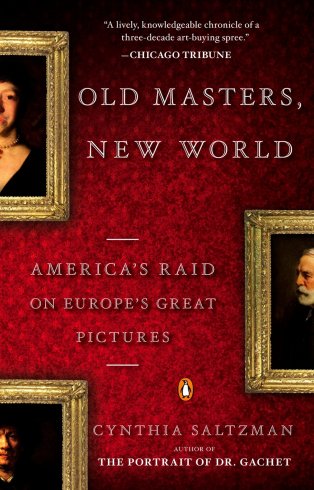
Old Masters, New World: America’s Raid on Europe’s Great Pictures

raidAmerica, specifically New York, was not seen as the center for the art world until the twentieth century. Before that, Europe, specifically Paris, was the center of the art world. Artists from all over the world traveled to the City of Lights to train and broaden their artistic scope. With the artists, came many art enthusiasts and patrons who would become famous in their own right, people such as Gertrude Stein.

Then, by the end of the nineteenth century, America began to overtake England as a world power. In doing so, America began to thirst for the next step up the ladder of power. It needed to show and deem itself an artistically rich nation that too had the likes of Vermeer, Rembrandt and Raphael adorning the galleries of its museum.

Capturing the Madness of Art

In Old Masters, New World: America’s Raid on Europe’s Great Pictures, Cynthia Saltzman takes her readers on an in-depth, striking look at the fever that swept across America in needing to bring both famous and well-known objets d’arts to America. As Henry James called it, and David Michaels references it, Saltzman captures “real people, men and women alike, frantic to lay hands on the power and beauty and immortality – the madness, of art.”

It is most interesting to see this madness, this rush for dominance and immortality as a world power through documents and passages that Cynthia Saltzman lays out for the reader in detail. It goes to show that it was not only Napoleonic France and Nazi Germany that hoarded and often more times then not acquired works underhandedly in the name of nationality and pride.

Overall, Saltzman’s book encourages readers to look beyond the image and to see the high-price that some of these old world masters came with as they made their journey to America. It is fascinating to see and learn how major museums and collectors collaborated together to in essence, loot Europe of some of its most prized and well-known works of art.

Cynthia Saltzman

According to her website, Saltzman holds degrees in both art history from Harvard and the University of California, Berkeley, and an M.B.A. from Stanford. She has also worked as a reporter for Forbes and The Wall Street Journal. Saltzman is also the author of Portrait of Dr. Gachet; The Story of a van Gogh Masterpiece. She lives in New York.

Old Masters, New World: America’s Raid on Europe’s Great Pictures by Cynthia Saltzman is available for purchase with ISBN 0670018317 from Viking Adult. It was first published on August 14, 2008.