A Review of War-Revolution-Weimar: On Ida Katherine Rigby’s Exhibition and Catalog Essays

weimarBeginning with Max Pechstein’s cover illustration for the Novembergruppe’s book, Rigby sets a clear tone for her catalog. Portrayed is an able bodied man, shirtless and with flames erupting from his chest. Above his head reads “AN ALLE KUNSTLER” which when translated means “to all artists” and served as a message to the German Expressionists. From the fiery introduction, Rigby transitions smoothly into the War Period where she focuses on the attitudes that created art.

The War Period

Rigby states how many German soldiers emerged from World War I as vehement opponents to war. With brief yet concise explanations, Rigby juxtaposes the historical influences of the period along with dark depictions of a post-war culture, shedding further light on the mind state of artists who were working during this period. Otto Dix and Christian Rohlfs are among the largest contributors to this section.

Political Posters

What is the most interesting section of this catalog is the fourth segment which covers political posters during the Revolution. The now socialist government moved to allign itself with the Expressionists. They had hoped that this group of artists would ignite in the workers the same spirit that had caused them to revolt in the first place. What was inevitably created were posters with blatant political satire that were rich in harsh imagery and color, unlike what the infamous Daumier had been doing during the French Revolution two hundred years before.

The Weimar Art Period

The Weimar Republic refers to the parliamentary republic established in 1919 in Germany. The culture of this government lasted from 1919 to 1933 when Hitler and the Nazis party rose to power. It is during this period that the aforementioned political posters would flourish, the beginning to Bauhaus would be introduced to the world and Germany would be viewed as an intellectual center. Otto Dix is most assocaited with this period as he was very prolific during these years. Rigby includes many of his poster throughout th book and especially in conjunction with the Weimar Period.

Overall, Rigby compiled a clear exhibition and accompanying catalog. It is both intriguing and concise at the same time which allows for the reader to take time while studying the images that she has chosen to portray along with her essays. Its a different look at Germany, as the Weimar period is not often covered in-depth as it is here.

War-Revolution-Weimar by Ida Katherine Rigby is available through the Sa Diego State University Press with ISBN 0916304620.

Forging a Modern Identity: Masters of American Painting Born After 1847 – A Review

identityThere are many books written about modern American painting. Many serve as a general overview of the period and some go into great detail and discussion over a specific artist or movement. What sets James W. Tottis’ catalog apart from other art books such as these is that along with strong, well-researched essays, he has also included high resolution details of larger works that coincide with specifics discussed in the text.
Such an inclusion helps to further engage the reader about the material that is being debated and discussed. It offers readers a different view, a more in-depth vision of the works themselves as well as the period of art history with which they were created in. They truly bring a part of art history to life.

America Forges Its Own Identity

Moreover, looking at the period in general, James W. Tottis has chosen a significantly interesting time to further explore and present. Tottis includes works from the later 19th century and first half of the 20th, a time where America was changing drastically. In art alone, there was a large movement from away traditional landscape and historical narrative paintings. At this time, America itself was forging ahead, creating a new identity and moving towards a modern nation. Artist of the time were creatures of their environment and what was being created was largely based on the study of human form, society figures and everyday scenes.

Laying the Ground Work for the Abstract

From this breaking away from the traditional artists such as Mary Cassatt and Marsden Hartley were laying the ground work for what would inevitably follow in movements to come – abstraction of the human form and a general moving away from it all together.

Tottis does a great service to his readers by including many of the more well-known artists of this transitional period within the American art historical timeline. The text that he includes along with such examples bring to life this period and help readers to begin to make connections to varying art forms and artists who would follow this period.

Overall, James W. Tottis has done an excellent job in editing Forging a Modern Identity – Masters of American Painting Born After 1847. Both seasoned art historians as well as budding art history students would greatly benefit from Tottis’ work.

Forging a Modern Identity – Masters of American Painting Born After 1847 edited by James W. Tottis is available for purchase through D. Giles Ltd. with ISBN 1904832067

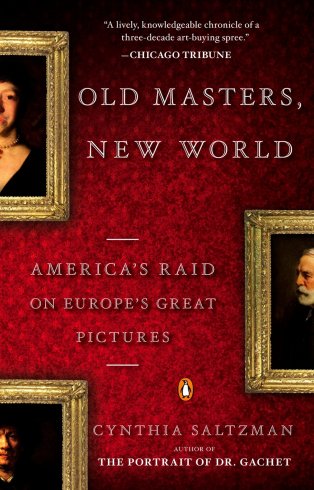
Old Masters, New World: America’s Raid on Europe’s Great Pictures

raidAmerica, specifically New York, was not seen as the center for the art world until the twentieth century. Before that, Europe, specifically Paris, was the center of the art world. Artists from all over the world traveled to the City of Lights to train and broaden their artistic scope. With the artists, came many art enthusiasts and patrons who would become famous in their own right, people such as Gertrude Stein.

Then, by the end of the nineteenth century, America began to overtake England as a world power. In doing so, America began to thirst for the next step up the ladder of power. It needed to show and deem itself an artistically rich nation that too had the likes of Vermeer, Rembrandt and Raphael adorning the galleries of its museum.

Capturing the Madness of Art

In Old Masters, New World: America’s Raid on Europe’s Great Pictures, Cynthia Saltzman takes her readers on an in-depth, striking look at the fever that swept across America in needing to bring both famous and well-known objets d’arts to America. As Henry James called it, and David Michaels references it, Saltzman captures “real people, men and women alike, frantic to lay hands on the power and beauty and immortality – the madness, of art.”

It is most interesting to see this madness, this rush for dominance and immortality as a world power through documents and passages that Cynthia Saltzman lays out for the reader in detail. It goes to show that it was not only Napoleonic France and Nazi Germany that hoarded and often more times then not acquired works underhandedly in the name of nationality and pride.

Overall, Saltzman’s book encourages readers to look beyond the image and to see the high-price that some of these old world masters came with as they made their journey to America. It is fascinating to see and learn how major museums and collectors collaborated together to in essence, loot Europe of some of its most prized and well-known works of art.

Cynthia Saltzman

According to her website, Saltzman holds degrees in both art history from Harvard and the University of California, Berkeley, and an M.B.A. from Stanford. She has also worked as a reporter for Forbes and The Wall Street Journal. Saltzman is also the author of Portrait of Dr. Gachet; The Story of a van Gogh Masterpiece. She lives in New York.

Old Masters, New World: America’s Raid on Europe’s Great Pictures by Cynthia Saltzman is available for purchase with ISBN 0670018317 from Viking Adult. It was first published on August 14, 2008.

Art – Over 2,500 Works from Cave to Contemporary

2500Working with a close group of academics and editors, DK Publishing has put together a brief overview of the history of art. Here, in 2,500 color images, readers will find well-known works and details of pieces that have claimed fame in the art historical time-line. It is the sort of book that is suited towards those with an interest for the subject, but who lack time to devote to meticulous hours of study in the area. Not every appreciator of art has years to devote to the study of Art History. DK Publishing has reduced the academic world of the subject into 2,500 images.
From Altamira On

The earliest of cave paintings where uncovered at the turn of the last century in Altamira, Spain where an amateur archaeologist and his young daughter had been exploring. The discovery is often credited more towards the child than the parent. It is here that many introductions to art and its history have begun. Utilizing beautifully rendered pictures of the caves, Art: Over 2,500 Works from Cave to Contemporary begun a time-line that draws interested readers in to the world of Art History.

The Major Periods

The books goes on to create reproductions of works that have only begun to greatly influence the contemporary movements. DK Publishing reproduces works that were originally created by more than 700 artists, adding to the time-line that they had begun with the introduction to cave painting. It’s weakness, may fall in its glossing over the more precise periods of art, but for those who peruse the subject more as a fun past time will not be bothered by this as general knowledge and pictorial evidence abounds in these sections.

Where it Differentiates

While the book does gloss over many of Art History’s integral parts, it does go in depth with regards to artist biographies and time-lines. The backgrounds that the book covers as well as its organizational methods are what make it overall. It is here that the book shines in its rendition to the history of art. Along with its simplistic approach to the subject, it is also concise in what it lends to the reader making it a strong source in the arsenal of anyone who wishes to even briefly be associated with art and its history.

What is Most Striking

Outside of the explanations that the book offers are the more in-depth explanations of how these reproductions play into the time-line that so many academics have attributed to the study of art as a history. Overall, Art: Over 2,500 Works from Cave to Contemporary is a gem for anyone who wishes to learn more about Art History as a subject as opposed to a simple time-line that is largely overlooked by more contemporary historians that are quick to forget it as a scholarly endeavor.

Art: Over 2,500 Works from Cave to Contemporary is available through DK Publishing with ISBN 0756639727.

About Vernon Hyde Minor’s Art History’s History

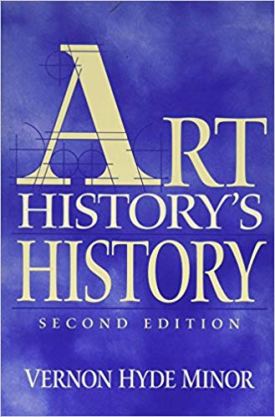
art historyBudding art historians and those with only a slight interest in the subject should pick up a copy of Art History’s History by Vernon Hyde Minor. It not only creates a brief introduction into the rich and lavish world of Art History, but it also relates to the reader in such a way that it can be considered a book based on the introductory level of Art History. Vernon Hyde Minor simplifies the practice of art and its history to appeal even to the casual reader of the subject.
Vernon has done something that most art historians would view as the impossible – he has taken the entire history of art and condensed into 200 pages. He has done so in such a way that readers are not missing out on any sort of basic introductory information. If anything, such a concise compilation will draw more people into the history of art and help to foster an appreciation for the subject that might have otherwise gone overlooked.

Terminology

In Art History, much of the terminology used can be considered to be a language all its own, if it is not in another language to begin with. The subject is steeped heavily in French and German and those who are not trained in either language may have a hard time adjusting to Art History as a subject. However in his book, Vernon avoids this sort of confusion thereby allowing the history of art to be understood by those who are not classically trained in the subject.

Why is Art History Taught?

Through methodologies and the evolution thereof, Vernon Hyde Minor attempts to explain to his readers not only the importance of Art History, but also why it is being taught, specifically in American classrooms. Unlike its European counterparts, the American people often times overlook the importance of the subject and are quick to dismiss it when their children return home from their first semester of college, announcing their major as Art History. Vernon Hyde Minor tries to debunk that ideal, but displays its importance through his methodology.

Focus on the Famous

Many of the works discussed and highlighted in Vernon’s book are famous works that the general public would be aware of. By doing so, Vernon’s concise and condensed history of art has the potential to draw people in to the subject matter. By the time a reader has completed this book, it is sufficient to say that they would be willing and open to the idea of learning and reading more about the mini-course they just took on the subject.

Vernon Hyde Minor’s Art History’s History is available for purchase through Prentice Hall with ISBN 0130851337.

Anton Gill’s Art Lover – A Review

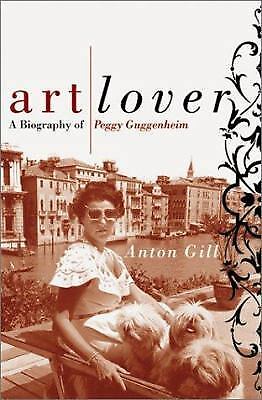
peggyPeggy Guggenheim is known for many things – the death of her father on the RMS Titanic, her sexual escapades and most importantly, her hand in the founding of Modern Art.
Anton Gill paints a colorful portrait of the late Peggy Guggenheim in his biography entitled, Art Lover. It begins where Peggy began, being the young daughter of a Jewish family in New York’s elite inner circle at the turn of the last century. From there, the book unfolds into Peggy’s illustrious life abroad.

Donna Seaman explains it best in Booklist, “Gill patiently records every battle in her two violently contentious marriages, her compulsive promiscuity, miserable failure at motherhood, and peripatetic lifestyle, then, with a sigh of relief, concentrates on her vision and generosity in supporting avant-garde writers and artists and her influential role as gallery owner and pioneering modern art collector. In spite of much chaos and unhappiness, Guggenheim–flamboyant and audacious, a magnet for gossip and a champion of artistic freedom–did move culture forward in the face of fascism, virulent anti-Semitism, and pervasive sexism.”

Guggenheim was Neither

Guggenheim was not one of her richer relatives, nor was she known to be a great beauty, however Gill focuses on not only how this would later form her life, but also how it would change it. Peggy preferred Europe to America and often used her sexuality to claim the things that she wanted- whether they be an artist or a painting.

Private Life

Gill outlines Peggy’s early life in a series of re-tellings about Peggy’s early marriage to the Dad sculptor, Laurance Veil. Together they would have two children and a very tumultuous relationship that would inevitably end in divorce. Gill depicts her life in New York with Veil, their move to Europe which seemed to only strengthen the intensity of Peggy and Laurance’s arguments, culminating in the destruction of furniture and prized possessions more often than not. Laurance’s affair with Kate Boyle would ultimately destroy the marriage and Peggy would go on to marry Max Ernst for a brief time.

Her Gift to Modern Art

According to Gill, Peggy lived out the remainder of her life in Venice where her collections still remains. In recent years, her home has opened as a museum, inviting guests from all over the world to see what was once only privy to Guggenheim and a select few of her artistic circle.

Death

Following her death, Peggy Guggenheim was laid to rest in Italy. Her marker lays next to a plaque remembering all of the dogs that she had owned during her life.

Art Lover: A Biography of Peggy Guggenheim by Anton Gill can be purchased online through ISBN 006095681X from Harper Perennial.

The $12 Million Stuffed Shark: The Curious Economics of Contemporary Art – A Review

stuffedIn contemporary art, there are many questions to be raised as to why works sell and more strangely, how much they sell for. With each new movement, there are a series of new questions brought to the table – is this art? What will people pay to own it? Is there a place for it?

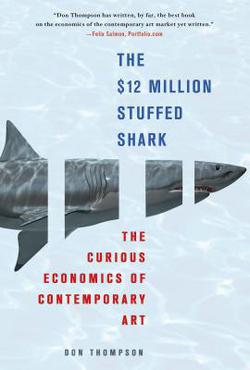
The $12 Million Stuffed Shark: The Curious Economics of Contemporary Art takes an in depth approach to such questions that are raised daily within the art world. Drawing on psychology and the economics of the contemporary art world, The $12 Million Stuffed Shark brings to light the flat out insane prices and lengths that people will go to to own the next “big deal.”

Pollock

When Jackson Pollock, for example, was emerging as the face of abstract expressionism, he was doing so at a time where form and training defined art. Had it not been for the help of Peggy Guggenheim and his wife, Lee Krasner, Pollock’s work would have continued to be overlooked. So, why, under what circumstance does his work now sell for a cool $140 million? Answer – A major contemporary art world figure head deemed it worthy. It is just one side of the psychology of the art world and how it feeds the art market’s economic makeup.

Damien Hirst

Following the same sort of mindset, Hirst paid to have the shark caught and then had the two ton carcus taxidermied and mounted, titled it The Physical Impossibility of Death in the Mind of Someone Living and set a $12 million dollar price tag. It didn’t sell, largely in part because of the weight of the piece, but also because unlike Pollock, no art world big-wig proclaimed it as the next big movement. It was eventually purchased by a wealthy investor after much controversy.

A Question Raised

By covering these types of controversial pieces and their buyers, The $12 Million Stuffed Shark: The Curious Economics of Contemporary Art makes the reader focus on questions that have plagued the art world, society and the individual ever since the Venus of Willendorf and those questions often have only personal answers. After all, what is art? What defines a creation as a work of art? Who needs to say it is art before it can seriously be considered as such?

The $12 Million Stuffed Shark: The Curious Economics of Contemporary Art by Don Thompson is available for purchase through Palgrave Macmillan with ISBN 0230610226.


Death and Restoration (Art History Mystery) – Book Review

dearhThere is nothing quite as lush as pairing the rich, vibrant world of art history with that of a mystery. Iain Pears, an art historian, pairs the two together in his novel, Death and Restoration. It is the sixth novel in Pears’ Jonathan Argyll series. However, readers who are new to it, will not be lost in what came in books prior. Pears subtly reminds his readers of important past events and relationships that are key to following the mystery in Death and Restoration.
The Plot

Again, the book opens with the series main characters, Argyll and his soon-to-be wife, Flavia di Stefano. The two are immersed in the Italian art world– Flavia, as a member of the Rome police’s art squad and Argyll as a professor of art history. The plot is mainly centered around a art-theft, but breaks off into smaller sub-plots that each character seamlessly narrates.

Argyll, for example is bothered by his fiancee’s frequent absences from their wedding planning while, Flavia is more pre-occupied with trying to prove that her revival, Mary Verney is in Rome, bent on master-minding a great art theft. However, everything is changed when it is uncovered that Verney is in Rome to steal a painting, but her reasons for it have nothing to do with personal gain, but rather to free her kidnapped granddaughter Louise from the sadistic Mikis Charanis.

The Mystery

Further questions arise, though, when Verney is supposed to steal the Madonna artifact from San Giovanni. The big question is, why does Mikis Charanis want this artifact? Why would he want the lesser known, not as valuable artifact when he could black mail Verney into stealing the Caravaggio that San Giovanni is known for?

For those who had fallen in love with the Jonathan Argyll series with An Instance of the Fingerpost, they will not be let down by where Pears takes the series in Death and Restoration. Overall, this installment of the series is full-bodied and enticing as the reader is led through the underbelly of the art world and through the lush richness of Baroque-inspired Italy.

Other works in the Jonathan Agryll series includes The Raphael Affair, The Titian Committee, The Bernini Bust, The Last Judgement, and Giotto’s Hand. So far, the series has not been extended past The Immaculate Deception. Pears does have a body of work outside of his Jonathon Agryll series.

Death and Restoration by Iain Pears was published on August 5, 2003 by Berkley Trade with ISBN 0425190420.

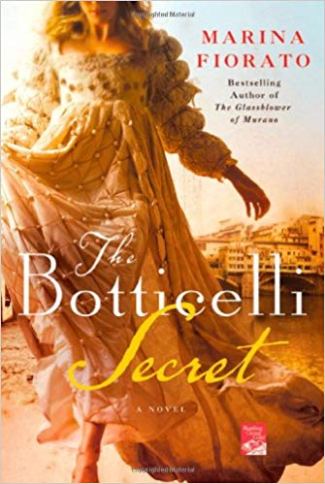
Book Review: The Botticelli Secret

secretSteeped in the turmoil of the non-unified Italy of the 1400’s, Marina Fiorato skillfully weaves a detailed and evasive mystery around one of Botticelli’s more famous paintings, Primavera or Allegory of Spring. The painting is packed with meaning alone, but Fiorato takes the painting to an entirely new level in her book, The Botticelli Secret.

Primavera

Painted in 1482, the Primavera was created by Italian Renaissance artist Sandro Botticelli. He was of the Florentine school and worked during the Early Renaissance or Qauttrocento. It is suggested that the allegory had been petitioned by the Medici family.

The work is largely accepted as an allegory of springtime, however, other themes and meanings have been explored, including the idea that the painting illustrates the ideal of Neoplatonic love. For Fiorato, the painting serves as the basis for her art history mystery in her novel.

The Plot

Fiorato opens her novel with the introduction of her heroine- common whore by the name of Luciana Vetra. She is described as a classical beauty, with long flowing ringlets and a sharp tongue from the four years that she spent on the streets of Florence. She is aptly named for how she arrived in Florence. Her origins for much of the novel are unknown, but from the beginning Luciana speaks of her uncommon arrival in the city- as a baby washedup on the shores of the city in a glass bottle.

The reader is quickly drawn to her, despite her abrasiveness and crassness that are abundant in the earlier part of the novel, but softens as she finds herself and finds love during the course of the story. Her flaws make Luciana realistic and easy to relate too, despite the over-the-top mystery and life that she eventually gets swept up in to.

Fiorato’s story of Luciana, Primavera and the mystery that engulfs everything is skillfully rendered and so lush that the reader easily gets immersed in the world of what Italy was like during the early part of the Renaissance. Fiorato leaves nothing to the imagination and stays away from romanticizing the period, leaving the reader with a raw and detailed depiction of what life was like during the time that Botticelli lived and worked.

The Botticell Secret by Marina Fiorato was originally published in April of 2010. It is available for purchase through St. Martin’s Griffin, New York with ISBN 978-0-312-60636-7.

Book Review: The Women

womenMany creative geniuses have a torrid past with the women that loved them. Pablo Picasso and Jackson Pollock are just two examples. However, in T.C. Boyle’s The Women, he focuses on the madness and the passion that engulfed much of famed architect Frank Lloyd Wright’s life.

The Four Women

T.C. Boyle brings to life Frank Lloyd Wright’s life by telling it through the four women who loved him in life. He begins with the failure of Wright’s marriage to his wife, Miriam, an older, passionate southern woman who had a heavily hidden addiction to morphine.

Boyle goes on to infuse the the novel with heat and passion when Wright meets the woman that would take him away from his wife. Exotic and fiery, Olgivanna Milanoff became dubbed the “Dragon Lady” by Lloyd’s apprentices. She lived with him at his famed estate, Taliesan first under the lie that she was his maid, but her pregnancy quickly gave away their affair.

More sweetly, Boyle also recounts Wright’s relationship with his first wife, Kitty Tobin with whom he had had six children with. More idealized and poignant, the passages on this relationship humanize Wright while the other women seem to make him more tortured and lost.

What is most tragic about the novel is the inclusion of Mamah Borthwick Cheney, Wright’s mistress who was tragically murdered at the Taliesan estate in 1914 along with her two children.

Downfall of The Women

As scandalous and impetuous much of the historical basis for the novel is, what is the downfall of Boyle’s novel is the narrator. The story is told from the viewpoint of Frank Lloyd Wright’s Japanese apprentice which just does not fit the novel. Moreover, the over-usage of footnotes to ensure that all information even parts that do not seem to matter take the reader away from the meat of the story. They often are confusing and stuck in places that would be better suited without them. It becomes rather difficult to get through the story in some parts.

All in all, T.C. Boyle does a great job of making The Women seem more of an actual biography than a historical fiction novel. It would have been better served if Boyle had reserved himself with regards to the amount of information he felt necessary to include with the text and with the foot notes.

The Women by T.C. Boyle was first published in 2009 by Viking Publishing with ISBN 978-0-670-02041-6.