
The early 2000’s was a great time for art history books. Of course there was Dan Brown’s The DaVinci Code but you also had Tracey Chevalier writing Girl with a Pearl Earring and several other art historical novels. I couldn’t put those books down and in many ways, they helped to further my passion for art history and complete my undergraduate degree in it. I was immersed in their worlds almost immediately and the luscious of the art history periods they were covering just drove me further into the story.
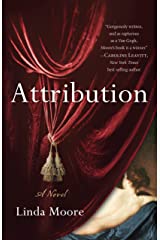
When I first picked up Linda Moore’s Attribution, I was immediately transported into her story the same way I had been in the early 2000’s with other art history novels. Moore starts off her tale by showcasing the misogyny that can plague art history departments if you allow it to. I remember it well as an undergraduate– male professors always loved to tell you you didn’t have what it took, but you overcome it. Moore’s Catherine Adamson is struggling through a similar departmental struggle with her dissertation chair who never is happy with where she is going and inwardly she fears being let out of her graduate program which is why she doesn’t argue with him when her chair sends her down into the basement of the department to catalog any and all works that she finds.
While there, Catherine stumbles across a forgotten room and a stashed away canvas that by the pigment alone tells her is much more valuable than its current surroundings. At first, Catherine is unsure of what to do– leave it? Share the find with her chauvinistic professor? Find a way to catalog it? Catherine is not given much time to decide as her discovery is followed rather quickly by an unnerving meeting with her chair that leaves her rattled enough to forget the painting. Only then, she’s suddenly outside with the painting and unable to get back because the building has gone into lockdown…something very valuable has been stolen!
At first Catherine thinks of the painting, but how would anyone know it was missing since it was uncovered in a secret room, buried in a long forgotten chest? Circumstances and chance quickly push Catherine into the heart of the mystery as she finds herself on a plane to Madrid instead of one home to Michigan for Christmas.
In the vein of Katherine Neville’s The Eight, Moore quickly engulfs us in the mysteries of the past, of women who struggled long ago and of Catherine’s own journey towards her future. Her plot is rich in art world references and lush prose that intrigues you to keep reading. It is an art history fiction that leaves you thinking as Moore teaches us the importance of truth and honesty, even if it was forgotten to the past.
Book Information
Attribution by Linda Moore was published in October 2022 by She Writes Press under ISBN 978-1-64742-253-0. This review corresponds to a paper galley that was supplied by the publisher in exchange for this review.

 by Witold Rybczynski will be released on May 28, 2019, from Yale University Press with ISBN 9780300229073. This review corresponds to an advanced electronic galley that was supplied by the publisher in exchange for this review.
 edited by Scott Allan, Emily A. Beeny, and Gloria Groom will be released on June 25, 2019 from Getty Publishing with ISBN 9781606066041. This review corresponds to an advanced electronic galley that was shared in exchange for a review.
 There is nothing easy about writing historical fiction. Once a writer adds art into the mix, the project becomes something entirely different as many artists, especially those like Vincent Van Gogh are not so easily defined. Furthermore, having the ability to blend factual art historical information with the fiction a writer creates, is difficult and can often produce novels that are more of a creation as opposed to a well-researched, factual backdrop with a fictional story also added for entertainment.
 Kevin Nance of Booklist describes Houpt’s book through the following angle, “when houses like Sotheby’s trumpet their sales records – $104 million for a Picasso! – what’s a self-respecting art thief to do? In this brief and lively book, Houpt laments the transformation of art into an international commodity and sketches a series of quick portraits of famous latter-day art thieves and the intrepid detectives who try to catch them. In a few cases, Houpt has already been outpaced by events. Munch’s The Scream, stolen from a Norwegian museum in 2004, was recently recovered, and the Picasso sales record was eclipsed this year by the sale of a Klimt (once looted by the Nazis) for a reported $135 million.”
 , is a period in art history where the mature El Greco and the young Velazquez flourished.The court of Phillip III “ushered in a time of elaborate celebrations and religious festivals, a major expansion in new building, and an unprecedented rage for art collecting in the Spanish court. Spain’s art became more naturalistic and expressive; the royal portraits are masterpieces of detailed elegance, and the religious figures have reality and solidity new to the genre,” according to the School Library Journal.
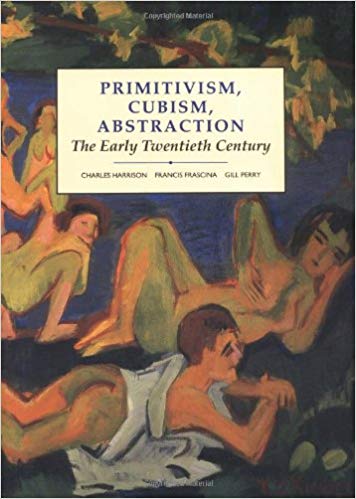 Primitivism is an area within art history that is most famously associated with artist Paul Gauguin. He often traveled to tropical areas such as Tahiti where he believed that he was observing primitive cultures that were untouched by the modern world. Largely, this was not the case, but in turn, Gauguin along with many artists who followed, began to paint native people in a basic, unassuming way.
 Artists will often look at, admire and even borrow from other artists to create their own style and ideas. For Pablo Picasso, this was Edgar Degas. His admiration bordered on near-obsession and even went on to extend to Degas’ personality.
 Budding art historians and those with only a slight interest in the subject should pick up a copy of Art History’s History by Vernon Hyde Minor. It not only creates a brief introduction into the rich and lavish world of Art History, but it also relates to the reader in such a way that it can be considered a book based on the introductory level of Art History. Vernon Hyde Minor simplifies the practice of art and its history to appeal even to the casual reader of the subject.
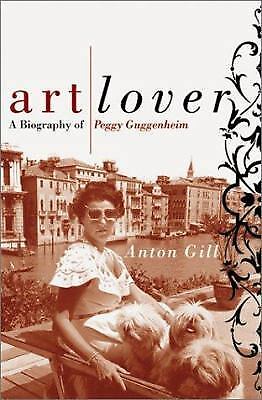 Peggy Guggenheim is known for many things – the death of her father on the RMS Titanic, her sexual escapades and most importantly, her hand in the founding of Modern Art.
 Katherine Kuzma-Beck