
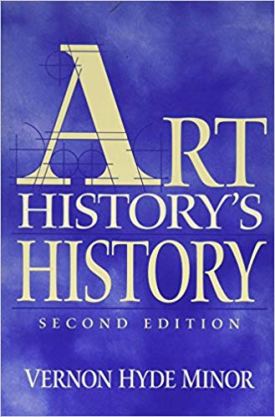
 Budding art historians and those with only a slight interest in the subject should pick up a copy of Art History’s History by Vernon Hyde Minor. It not only creates a brief introduction into the rich and lavish world of Art History, but it also relates to the reader in such a way that it can be considered a book based on the introductory level of Art History. Vernon Hyde Minor simplifies the practice of art and its history to appeal even to the casual reader of the subject.
Vernon has done something that most art historians would view as the impossible – he has taken the entire history of art and condensed into 200 pages. He has done so in such a way that readers are not missing out on any sort of basic introductory information. If anything, such a concise compilation will draw more people into the history of art and help to foster an appreciation for the subject that might have otherwise gone overlooked.
Terminology
In Art History, much of the terminology used can be considered to be a language all its own, if it is not in another language to begin with. The subject is steeped heavily in French and German and those who are not trained in either language may have a hard time adjusting to Art History as a subject. However in his book, Vernon avoids this sort of confusion thereby allowing the history of art to be understood by those who are not classically trained in the subject.
Why is Art History Taught?
Through methodologies and the evolution thereof, Vernon Hyde Minor attempts to explain to his readers not only the importance of Art History, but also why it is being taught, specifically in American classrooms. Unlike its European counterparts, the American people often times overlook the importance of the subject and are quick to dismiss it when their children return home from their first semester of college, announcing their major as Art History. Vernon Hyde Minor tries to debunk that ideal, but displays its importance through his methodology.
Focus on the Famous
Many of the works discussed and highlighted in Vernon’s book are famous works that the general public would be aware of. By doing so, Vernon’s concise and condensed history of art has the potential to draw people in to the subject matter. By the time a reader has completed this book, it is sufficient to say that they would be willing and open to the idea of learning and reading more about the mini-course they just took on the subject.
Vernon Hyde Minor’s Art History’s History is available for purchase through Prentice Hall with ISBN 0130851337.
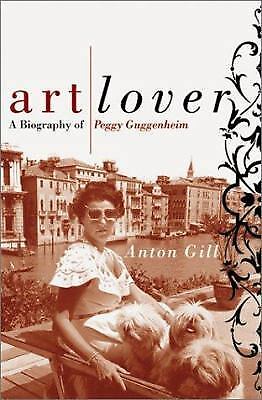 Peggy Guggenheim is known for many things – the death of her father on the RMS Titanic, her sexual escapades and most importantly, her hand in the founding of Modern Art.
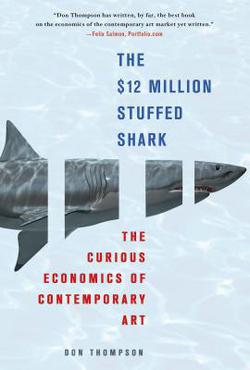 In contemporary art, there are many questions to be raised as to why works sell and more strangely, how much they sell for. With each new movement, there are a series of new questions brought to the table – is this art? What will people pay to own it? Is there a place for it?
 When you think of New Jersey today it is easy for your mind to drift to Snooki, Italian-Americans, lots of hair spray, fist pumping and any other stereotype that New Jersey has been blasted with over the course of the past few years with programing like The Jersey Shore and The Real Housewives of New Jersey. However, what has been forgotten and pushed aside is that New Jersey is rich in history that pre-dates the spray tans and hair-poofs.
 Picture getting to see some of the most breath-taking parts of Yosemite National Park before it ever was Yosemite National Park. Think of sweeping mountains, fresh, gushing water and abundant plant life. 19th century romanticism only touched on how beautiful these landscapes were and in some cases still are. Now, combining that 19th century writing with beautifully rendered 21st century photographs, this illustrated edition of a classic is not something that is easily put down.
 A baby book is not something that readers will typically associate with art books. However, the photography included in Your Baby Is Speaking to You is heart-warming and makes the book a great one to leaf through, even for those of us who do not have children and for those of us who are not usually captivated by other people’s off-spring.
 Christopher Burkett
 Katherine Kuzma-Beck