
The following volume corresponds to exhibitions at the Art Institute of Chicago which runs from May 26 to September 8, 2019 and the J. Paul Getty Museum at the Getty Center which runs from October 8, 2019, to January 12, 2020.

Unlike most Manet exhibitions, the curators of Manet and Modern Beauty chose to focus their show on a less popular period within Manet’s life: his later years. This is a period for the artist that is largely overlooked because it is such a shift from what Manet is so well-known for. The shift in his work is often attributed to his decline in health and his growing interest in fashion and women painters, namely Berthe Morisot, a woman created with being a source of inspiration for this period of his work.
Weaving together gorgeous reproductions of Manet’s works with essays and correspondence from the artist during this period in his life, Allan, Beeny, and Groom create an in-depth view of Manet and his later works. While the writing is academic in tone, the inclusion of the personal correspondence really illuminates where the artist was during this part of his life and how it could relate to why there is such a shift in his work from previous paintings.
As viewers, we get to see the lush social world that Manet found himself in during the 1870’s and 1880’s and in many ways, we can also uncover his commentary on this world that he lived in during his later years. With nearly 300 beautiful reproductions, Manet and Modern Beauty stands as a gorgeous literacy and artistic work that brings to life the later years of Eugène Manet.
Manet and Modern Beauty: The Artist’s Last Years
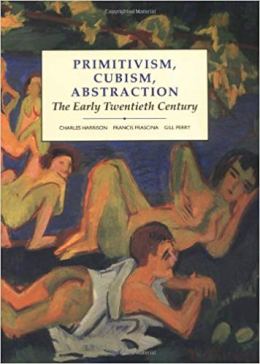 Primitivism is an area within art history that is most famously associated with artist Paul Gauguin. He often traveled to tropical areas such as Tahiti where he believed that he was observing primitive cultures that were untouched by the modern world. Largely, this was not the case, but in turn, Gauguin along with many artists who followed, began to paint native people in a basic, unassuming way.
 Artists will often look at, admire and even borrow from other artists to create their own style and ideas. For Pablo Picasso, this was Edgar Degas. His admiration bordered on near-obsession and even went on to extend to Degas’ personality.
 A blocked writer, unhappy with her life and relationship takes off for a Parisian vacation. It is there that Tulia Rose encounters beautiful chalk drawings of some of Raphael’s most beautiful and famous creations of cherubs and light. The chalk drawings’ artist Raffaello, intrigues Tulia. She quickly finds herself asking if she loves him? Or is he a stalker? Or could he even be the reincarnation of the Renaissance artist Raphael?
 Katherine Kuzma-Beck