Book Review: A Woman in Berlin

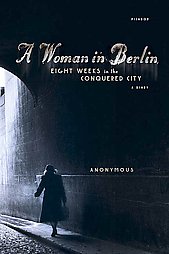
This past week, I read A Woman in Berlin: Eight Weeks in a Conquered City. It was hard to get through, not because of the writing which I loved considering the material, but just with how emotional the book was. The novel is the diary of a woman who recorded daily life during the Russian occupation of Berlin during the second World War.

For years, the book was published without credit, since its author feared what could become of her if it was known that she had in fact written it. It is presumed that the diary actually was of German journalist, Marta Hillers.

The diary largely chronicles the brutality and atrocities that can and do occur during wartime. The author descriptively records the multiple rapes she suffered at the hands of the Red Army, the murders, the suicides and the bombings that prevailed in Berlin following Hitler’s fall from power. She raises the question, is it really the more humane thing to do to leave women and children behind while men fight in wars? Without protection, women do become the booty of war (pun intended) and they die, along with the children.

The author is admirable because instead of making herself the victim, which she no doubt is, she rises above that. She uses her mind and her body to keep herself safe and to ensure that she can get food to feed herself and in turn the people that she lives with. Her bravery and courageousness that echoes in her writing is just unbelievable as when she was writing this, there was no end in sight for her. This was her life.

The book moves pretty quickly and what I enjoyed most about it was the author’s writing style. Though written in the 1940’s, the book had a more modern feel to the way it was written, completely pulling me into her story and the story of those she lived with.

Score: 4 out of 5

Book Information: A Woman in Berlin: Eight Weeks in a Conquered City is available for purchase with ISBN 0312426119 via Picador. This version was originally published in July 2006.

If you’re interested, there was even a movie made of this book not too long ago:

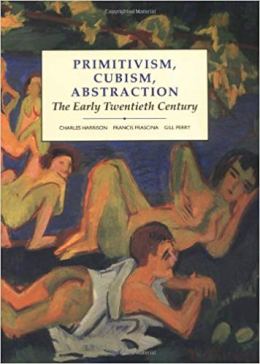
Primitivism, Cubism, Abstraction: The Early Twentieth Century

cubismPrimitivism is an area within art history that is most famously associated with artist Paul Gauguin. He often traveled to tropical areas such as Tahiti where he believed that he was observing primitive cultures that were untouched by the modern world. Largely, this was not the case, but in turn, Gauguin along with many artists who followed, began to paint native people in a basic, unassuming way.

Towards the later half of the 19th century and into the 20th century, artists began to form primitivist artist colonies in Germany and France. The fauvists and German expressionists would later follow.

In Primitivism, Cubism, Abstraction: The Early Twentieth Century, Perry, Frascina and Harrison begin by focusing the beginning of their catalog on the work of the primitivists and then moving into the works of the cubists and abstractionists, thereby creating a thematic and seamless look at the movement of art from and through the 19th and early 20th century.

Dr. Charles Harrison

Harrison was a professor at The Open University in the United Kingdom. He made many contributions to the humanities and more specifically the arts. He passed away in August of 2009. His full obituary is available through the University’s website.

Francis Frascina

Frascina is a is John Raven Professor of Visual Arts in the Department of American Studies at Keele University in the United Kingdom. According to the University’s website Frascina “founded the Department of Visual Arts at Keele University in 1994 and served as Head of Department from January 1994 to October 1998. He formerly held academic posts in Fine Art at Leeds University and in Art History at the Open University. His research interests include the social history of modern art and modernism and the relationships between art, culture and politics in America since 1945.”

Gill Perry

Perry is the co-chair of the Gender in the Humanities Research Group in the Arts Faculty at Open University in the United Kingdom, and was the Reviews Editor of the journal Art History from 1995 – 2001. Along with her accomplishments with in the University, she has also written several books and catalogs. According to the University’s website, she is also a panel member (Panel 2) of the Arts and Humanities Research Council, the main UK funding council for academic research.

Primitivism, Cubism, Abstraction: The Early Twentieth Century by Gill Perry, Francis Frascina and Dr. Charles Harrison was first published on May 26, 1993 and is available for purchase through the Yale University Press with ISBN 0300055161.

Art – Over 2,500 Works from Cave to Contemporary

2500Working with a close group of academics and editors, DK Publishing has put together a brief overview of the history of art. Here, in 2,500 color images, readers will find well-known works and details of pieces that have claimed fame in the art historical time-line. It is the sort of book that is suited towards those with an interest for the subject, but who lack time to devote to meticulous hours of study in the area. Not every appreciator of art has years to devote to the study of Art History. DK Publishing has reduced the academic world of the subject into 2,500 images.

From Altamira On

The earliest of cave paintings where uncovered at the turn of the last century in Altamira, Spain where an amateur archaeologist and his young daughter had been exploring. The discovery is often credited more towards the child than the parent. It is here that many introductions to art and its history have begun. Utilizing beautifully rendered pictures of the caves, Art: Over 2,500 Works from Cave to Contemporary begun a time-line that draws interested readers in to the world of Art History.

The Major Periods

The books goes on to create reproductions of works that have only begun to greatly influence the contemporary movements. DK Publishing reproduces works that were originally created by more than 700 artists, adding to the time-line that they had begun with the introduction to cave painting. It’s weakness, may fall in its glossing over the more precise periods of art, but for those who peruse the subject more as a fun past time will not be bothered by this as general knowledge and pictorial evidence abounds in these sections.

Where it Differentiates

While the book does gloss over many of Art History’s integral parts, it does go in depth with regards to artist biographies and time-lines. The backgrounds that the book covers as well as its organizational methods are what make it overall. It is here that the book shines in its rendition to the history of art. Along with its simplistic approach to the subject, it is also concise in what it lends to the reader making it a strong source in the arsenal of anyone who wishes to even briefly be associated with art and its history.

What is Most Striking

Outside of the explanations that the book offers are the more in-depth explanations of how these reproductions play into the time-line that so many academics have attributed to the study of art as a history. Overall, Art: Over 2,500 Works from Cave to Contemporary is a gem for anyone who wishes to learn more about Art History as a subject as opposed to a simple time-line that is largely overlooked by more contemporary historians that are quick to forget it as a scholarly endeavor.

Art: Over 2,500 Works from Cave to Contemporary is available through DK Publishing with ISBN 0756639727.

Book Review: The Women

womenMany creative geniuses have a torrid past with the women that loved them. Pablo Picasso and Jackson Pollock are just two examples. However, in T.C. Boyle’s The Women, he focuses on the madness and the passion that engulfed much of famed architect Frank Lloyd Wright’s life.

The Four Women

T.C. Boyle brings to life Frank Lloyd Wright’s life by telling it through the four women who loved him in life. He begins with the failure of Wright’s marriage to his wife, Miriam, an older, passionate southern woman who had a heavily hidden addiction to morphine.

Boyle goes on to infuse the the novel with heat and passion when Wright meets the woman that would take him away from his wife. Exotic and fiery, Olgivanna Milanoff became dubbed the “Dragon Lady” by Lloyd’s apprentices. She lived with him at his famed estate, Taliesan first under the lie that she was his maid, but her pregnancy quickly gave away their affair.

More sweetly, Boyle also recounts Wright’s relationship with his first wife, Kitty Tobin with whom he had had six children with. More idealized and poignant, the passages on this relationship humanize Wright while the other women seem to make him more tortured and lost.

What is most tragic about the novel is the inclusion of Mamah Borthwick Cheney, Wright’s mistress who was tragically murdered at the Taliesan estate in 1914 along with her two children.

Downfall of The Women

As scandalous and impetuous much of the historical basis for the novel is, what is the downfall of Boyle’s novel is the narrator. The story is told from the viewpoint of Frank Lloyd Wright’s Japanese apprentice which just does not fit the novel. Moreover, the over-usage of footnotes to ensure that all information even parts that do not seem to matter take the reader away from the meat of the story. They often are confusing and stuck in places that would be better suited without them. It becomes rather difficult to get through the story in some parts.

All in all, T.C. Boyle does a great job of making The Women seem more of an actual biography than a historical fiction novel. It would have been better served if Boyle had reserved himself with regards to the amount of information he felt necessary to include with the text and with the foot notes.

The Women by T.C. Boyle was first published in 2009 by Viking Publishing with ISBN 978-0-670-02041-6.

Book Review: The Sidewalk Artist

sidewalkA blocked writer, unhappy with her life and relationship takes off for a Parisian vacation. It is there that Tulia Rose encounters beautiful chalk drawings of some of Raphael’s most beautiful and famous creations of cherubs and light. The chalk drawings’ artist Raffaello, intrigues Tulia. She quickly finds herself asking if she loves him? Or is he a stalker? Or could he even be the reincarnation of the Renaissance artist Raphael?
Dreamy Settings

Tulia’s story and eventual love-affair takes her across Europe to lush settings that are both dreamy and romantic. Readers are indulged in sensual Paris, dream-like Tuscany and beautiful Venice as Tulia navigates herself through her budding affair and eventual break-up with her New York boyfriend, Ethan.

The settings are beautifully described and detailed by an author with a keen eye for the intricacies that the romance of Europe offers its visitors. Buonaguro writes, “What truly moves Tulia is not the Eiffel Tower or Notre Dame Cathedral or any of the wonderful sights. It is the little things. A windowsill with a pot of geraniums and a glimpse of lace curtain, the way the sun glances off a puddle, the echo of her heels as she walks down a narrow cobblestone street, the taste of coffee at an outdoor cafe, the sound of children calling out to each other in French,” making it easy for the reader to fall in love with Paris even if they haven’t had a chance to make it there yet.

The Failing Hero

The downfall of The Sidewalk Artist, in my opinion was Raffaello – Buonaguro’s hero. Instead of being the romantic artist that was meant to sweep readers off their feet as they read, I found Raffaello to be more creepy than to be someone with whom I would want to disappear into the European countryside with. I kept waiting for a plot twist wherein the entire story line became something sinister and it was with that thought that kept me from completely falling in love with the story though I did find the idea of the parallel plot and romance to be creative and intriguing.

The Sidewalk Artist makes for a quick read and is great if you’re looking for a sweet story to spend a day at the beach with.

The Sidewalk Artist by Gina Buonaguro and Janice Kirk is available for purchase through St. Martin’s Griffin with ISBN 031237805X. It was released on April 1, 2008.

The Miniaturist by Jessie Burton

Edging out the 9th spot on my 100 book challenge is Jessie Burton’s The Miniaturist. I bought this book at Heathrow airport to read in 2014 when we were headed home from our big Euro-trip. I wound up being allergic to the person in front of me on the plane. I seriously still would like to know what kind of perfume it was…so, I wound up sleeping thanks to benadryl for the entire flight home. I never even opened the book.

And from there I moved around and it sat in my bookshelf and in a box for sometime, before I finally picked it up again this summer. I really wished I had read it sooner. I love the Netherlands. When I do go back to Europe, I want to spend a good chunk of time in the Netherlands, riding bikes and eating copious amounts of cheese. It’s one of the most beautiful places I have ever been.

TheMiniaturist

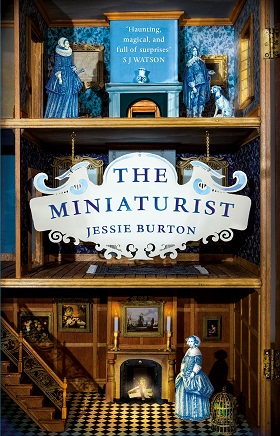
In Jessie Burton’s The Miniaturist, we follow a young girl, Petronella Oortman, who is recently married to one of Amsterdam’s most well-off merchants, Johannes Brandt.  The two barely know each other and it becomes clear about Nella’s arrival that all is not what is seems in her new home. She has a sister-in-law who appears devout and overtly religious, a mix of servants that owe their lives to Johannes and a husband that has little interest in Nella as a wife.

It’s pretty easy to figure out almost immediately that Johannes is gay and pretty much only married Nella out of duty to give his family a proper facade. They do develop a friendship in their marriage, that for me, I felt was more about Nella constantly protecting her new family instead of herself. It was a good, quick read and it paced very well, with a lot of tension as well as suspense driving most of the book.

The ending however, had me wondering what the point of including the sub-plot of the miniaturist was? Outside of driving suspense for the novel, the ending really had her fizzle out without much reason as to why she had even been there in the first place. It was pretty interesting how she sent messages to Nell through the miniatures that she ordered from her for her doll house, but it is not even explained how the woman knew some of the things she warned Nella about or what her motivation for doing any of it was? I found her ending confusing at best.

I was really surprised to learn that this novel was based on real people: Johannes and Nella were a merchant couple, who married and lived in Amsterdam in the late 1600’s. Learning that, I thought it was a bit salacious to write the events of the novel as they were, seeing as there is no historical evidence of a sham marriage to hide a man’s homosexuality. And yes, there is even a real dollhouse that had inspired the author when it was on display at a museum:

Dolls__house_of_Petronella_Oortman

The dollhouse at the time, had cost the same as buying a real canal house in Amsterdam. Can you imagine that? So crazy! People like Peter the Great even attempted to buy it, but wouldn’t rise to the crazy price that the family was trying to sell it for.

This is definitely good for a quick summertime read. I’ve recently started the much controversial Harper Lee’s Go Set a Watchman.


Away We Go: Where Life Puts You Down

There’s this Ben Okri quote in The Famished Road, a really great book that I read from the optional reading list when I took Art of West Africa as an undergraduate student at Rutgers. It say, “This is what you must be like. Grow wherever life puts you down.” As a clueless 20-something at the time, I appreciated the sentiment, but it has only been recently that I have really gotten it.

For most of my life, I had a plan for myself and though it changed and diverted in places I am reaching the end stages of that early adult life plan: become a teacher who writes books and travel, get married to someone you love with your whole heart, and finish your PhD. Of course, at the time I thought it would be a PhD in art history and that I would be an art history professor, but the way it has turned out has made me happier than I would have been had I followed the original path. Life had other plans and I grew into them because it’s where I was put down.


Again the tides are starting to change and with them, I am beginning to feel the feelings that signal change and uncertainty. In 2015, I took a huge leap of faith and commitment. I left my apartment in Bordentown and bought a house at the Jersey shore where I would move to with my boyfriend. I have never lived with a boyfriend and really never thought I would, but that’s the path life was taking me and instead of second guessing everything like I always do, I went with it and in doing so, I made one of the best decisions of my life: I began my own family with the man of my dreams and in 5 months, we’re going to be husband and wife.

Which has led us to a whole new set of adventures and life questions. After this year, we’ll be married and God willing, my PhD will be completed which means I will begin to look for administration positions as well as full-time university positions. We’ve begun to discuss many things, but the biggest one is: How committed are we to a life in New Jersey? And, where do we want to live?

We’ve outgrown our tiny seaside house with just us and the tiny zoo. Both of our dogs are full grown now and they would be so much happier with a lot of space to run around in. With the concern over honeymooning in Ireland, which, I think is also fed into by when we were in France/England in 2014 and were existing via Calais to Dover to Heathrow and they put the terror alert to red as we walked through lines of migrants, riot police and a crazy airport, it was all very unnerving. The world has only gotten crazier. With all the talk of what to do for a honeymoon and what our plan is for the next steps in our lives, I started to suggest maybe a road trip? What if we just drove around to all the states we always wanted to see and experienced them for a little bit? We could be like John Krasinki and Maya Rudolph in Away We Go, and maybe figure out the next place that we want to venture to or at least try to, before life puts us down again.

Into the Wild & The Wild Truth

I found Into the Wild when I was going through the last breakup I would have before I would meet my future husband. The end of the that relationship was awful, but it also made me view a lot of what my dating life had been like up until that point. I loved toxic relationships, I loved the drama, I loved choosing emotionally unavailable men. It was a dark time in my life when it came to building healthy relationships.

I have no doubt that stems from earlier events in my life and perhaps one day, I’ll finally write about those. Sometimes, when I think back, I can almost pinpoint the moment that the toxicity seeped into me from my limited world around me. I just never really knew what a strong hold it took or how long it would take to get away from the causes and get it out of me.

I identified so strongly with:

“Some people feel like they don’t deserve love. They walk away quietly into empty spaces, trying to close the gaps of the past.”
― Jon Krakauer, Into the Wild

It really spoke to me and at times, when I am reflecting back on those parts of my life, I still feel like that was lesson I took away from that time and unconsciously carried with me for many years. I completely understood why a young man from a “good” family would pack a bag and disappear into the wilderness. It had nothing to do with young adulthood rebellion, but in so many ways a need for a rebirth from what he was born into. It just made sense to me and for awhile, I seriously considered putting all of my efforts into becoming an Alaskan Bush teacher.

9780062325143_custom-36ca5232e1922fbc7dc1ecdce267c506fd680e75-s300-c85
The Wild Truth, by Carine McCandless

In 2014, Chris’s sister, Carine published The Wild Truth which delves deeply into her family’s dysfunction, the lies and toxicity and really shows exactly why  Chris died in an abandoned bus in the Bush.

I immediately had bought it and read a chunk before I had to stop to focus on my master’s thesis. I finally got to finish it today and quite simply put: wow. I can’t remember the last time that I had tears streaming down my face as I finished a book. If you thought you identified with Chris, you need to read Carine’s side of things. I felt so many things and I just understood so much of what she went through and how as an adult, it largely became her, navigating her own life and making her own rules.

I highly recommend this memoir. In fact, I think I’m going to go home to day and re-watch the film adaptation of Into the Wild for the umpteenth time.

100 Book Challenge

For lent, I decided that I want to do something that helps me grow rather than giving up diet coke for the umpteenth time. I decided to give up some of my lazy free time. I’ve set a goal of reading 100 books by January as my wish for lent. (300 pages will equal 1 book).

I will update this as I finish novels:

1.) Big Little Lies by Liane Moriarty

2.) Doctor Sleep by Stephen King

3.) Exquisite Corpse by Poppy Z. Brite

4.) IT by Stephen King

5.) IT by Stephen King

6.) IT by Stephen King

7.) IT by Stephen King

8.) The Wild Truth by Carine Mccandless

9.) The Miniaturist by Jessie Burton

Love is, actually all around.

I make no grand illusions towards my 20’s and dating. Point blank: they sucked. I was often lost, broke and dating some wannabe. That was the majority of my 20’s until I wised up and held true to my standards.

I read a lot during that period in my life. In college, I was obsessed with Mr. Darcy Takes a Wife because I largely envisioned Colin Firth and all of the hot things that occur throughout that insanely long novel. More importantly though, it was the sort of relationship I envisioned for myself when I found the right man to have it with. It was passionate, loyal and brave with such a dedication to the other person that throughout the pages, many dramatic and daring things occurred to keep Lizzy and Darcy together. Though, Phil and I aren’t having dagger fights with scummy period men and riding horses bareback…or really riding horses at all, the sentiment is still there within our relationship.

6febe52758f076904485fe19d07ec8df
Mr. Darcy a la “Lost in Austen.”

When we became engaged, I had no doubt in my mind that yes was the answer and that this is the man I would stay with until death. Having that realization though, made me think back to my past and I became nostalgic for things, people and places that were no longer a part of my life. I also would get sad over some pretty stupid stuff like when my toaster oven from my apartment finally went. It was cheap and we use it a lot, but I was sad that that was another piece of my life before now that was gone. I know, it’s a toaster, get over it, but I did have a couple minutes of mourning over the toaster.

I picked up Mr. Darcy Takes a Wife and thumbed through it. Out fell papers from my first teaching job where I somehow became a french teacher. I laughed, and turned to the front, eager to re-read and picture my new Mr. Darcy courtesy of Lost in Austen. That’s when I saw it. The dedication page. I had never realized it before, because why would I ever have a need to? The author had dedicated it “to Phil.” Years before, I even knew Phil it seems that I was waiting for him.

I made note of it and put the book down, thinking it was just too weird of a coincidence. Fast forward to the weekend where we’re sitting at our church with our priest, formalizing all of the initial paperwork for our marriage. We’re getting married in the Byzantine church so Phil had to have all of this documentation from his Roman catholic church including his confirmation papers. I was half listening because it wasn’t my turn to speak when Phil got to the point of his confirmation name.

“Matthew,” he says to the priest. All of a sudden, I was listening again and laughing to myself.

Of course it would be. I spent so much of my early to mid-20’s subconsciously dating idiots because I had loved someone named Matthew. I told Phil about it later, over lunch. And just like Phil will always do, he took my hand and told me,

“You were just waiting for me like I was waiting for you. See, you knew it would be a Matthew, you were just wrong about which one. ”

Living the life and the love I have now, just makes me realize how much of us was actually already all around me until the universe knew the timing to finally let us meet.